

Plywood vs MDF vs HDHMR: What Interior Designers Should Use
As interior design moves toward more engineered, performance-driven spaces in 2026, material selection is no longer about habit or price alone. Designers today are expected to balance durability, finish quality, moisture resistance, fabrication precision, and long-term performance—especially in modular kitchens, wardrobes, and storage systems.
Three materials continue to dominate furniture construction: plywood, MDF, and HDHMR. Each has evolved, and each serves a specific role in modern interiors. This guide breaks down what interior designers should use in 2026, and where each material performs best.
1. Plywood: Still the Structural Backbone in 2026

Plywood remains the most trusted material where strength and longevity matter. Made from cross-layered hardwood veneers, plywood performs well under load and in moisture-prone conditions when the correct grade is used.
Explore Khidki Plywood options:
https://khidkihomes.com/collections/plywood
Where Designers Use Plywood in 2026
-
Kitchen carcasses
-
Sink units and utility cabinets
-
Bed frames and loft storage
-
Heavy wardrobes and tall cabinets
Why Designers Still Choose Plywood
-
Excellent screw-holding strength
-
High structural stability
-
Available in MR, BWR, and BWP grades
-
Performs well in Indian cooking environments
Limitations
-
Surface is not as smooth as MDF
-
Not ideal for CNC routing or detailed designs
-
Requires lamination or acrylic for refined finishes
Designer takeaway: In 2026, plywood is best reserved for structural and moisture-critical areas, not decorative surfaces.
2. MDF: The Go-To Material for Design and Finish Quality
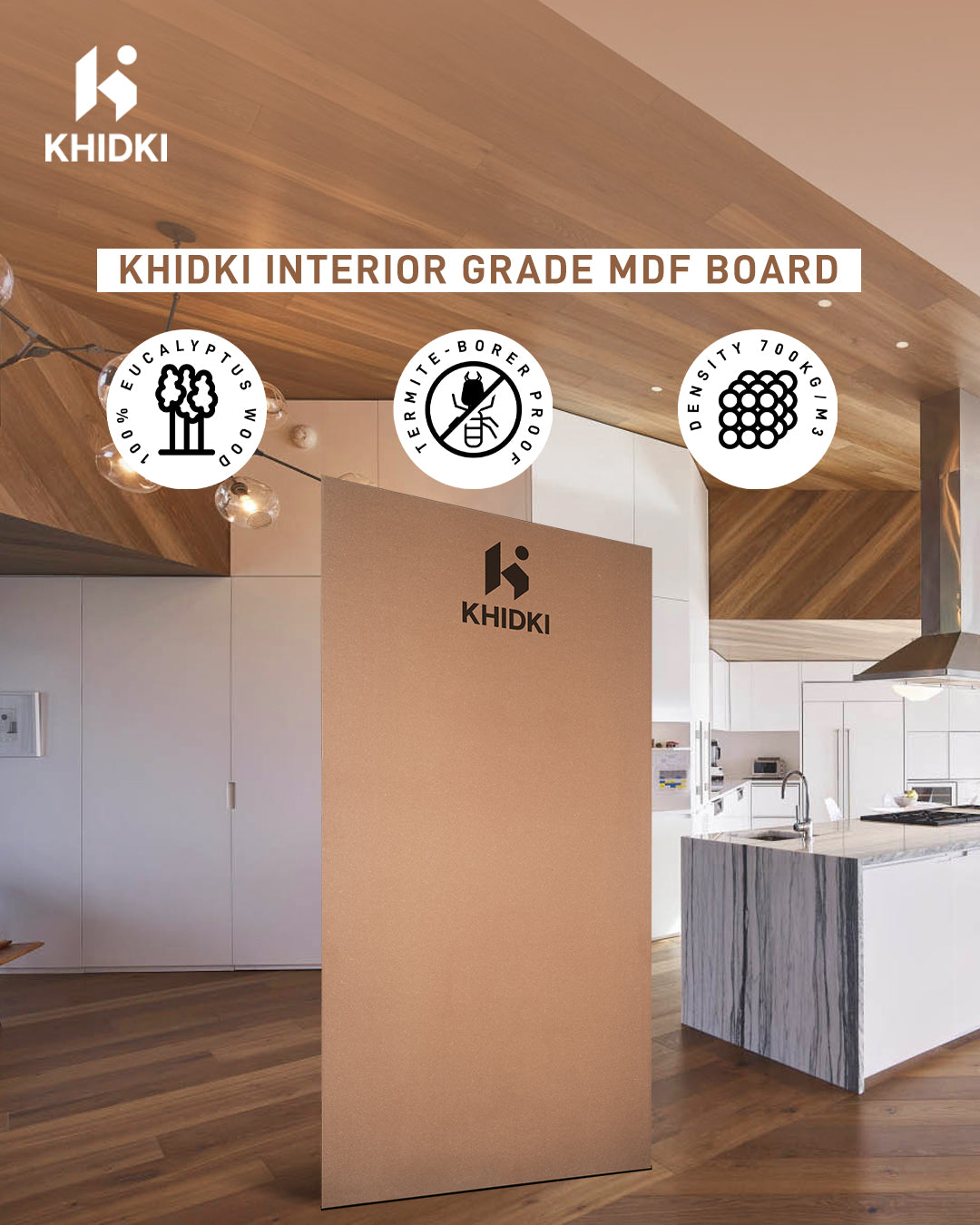
MDF continues to dominate aesthetic-driven furniture design. Its smooth, uniform surface makes it ideal for premium finishes, CNC patterns, and painted furniture.
Explore Khidki MDF boards:
https://khidkihomes.com/collections/mdf-hdhwr-boards
Where Designers Use MDF in 2026
-
Wardrobe shutters
-
TV units and wall panels
-
Fluted and grooved panels
-
Painted and PU-finished furniture
-
Decorative partitions
Why MDF Is Still Relevant
-
Perfect surface for laminates and paint
-
Ideal for CNC and curved designs
-
Consistent density and finish
-
Cost-effective for large projects
Limitations
-
Standard MDF is not moisture resistant
-
Requires proper edge sealing
-
Not suitable for wet zones unless upgraded
Designer takeaway: MDF is the best choice for visual refinement and detailing, provided moisture exposure is controlled.
3. HDHMR / HDHWR: The Material Designers Are Using More in 2026
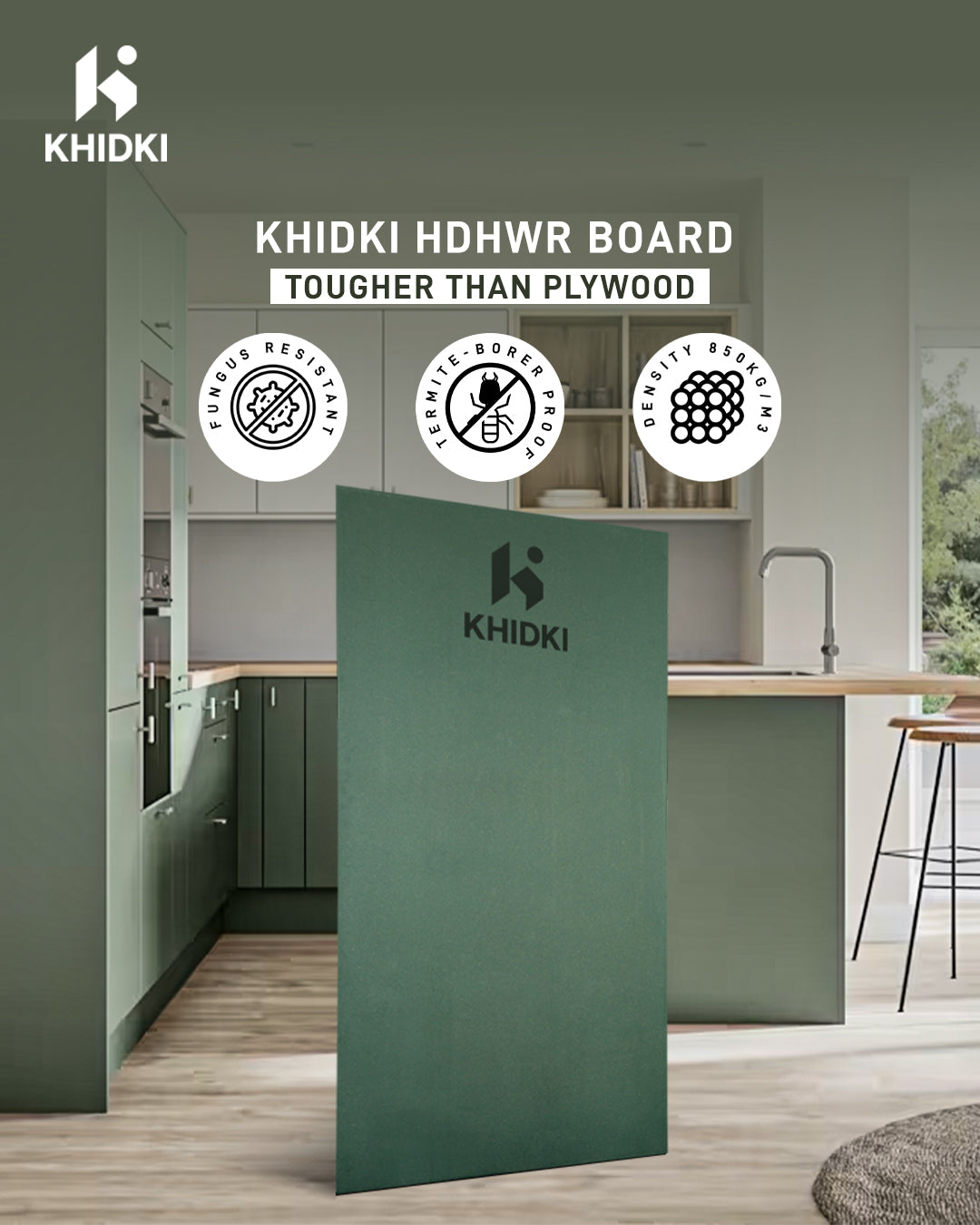
HDHMR (High Density High Moisture Resistant) boards represent the shift toward engineered performance materials. In 2026, designers increasingly rely on HDHMR where MDF aesthetics and plywood durability need to coexist.
Explore Khidki HDHWR boards:
https://khidkihomes.com/products/kasawud-hdhwr-green-color
Where Designers Use HDHMR in 2026
-
Kitchen shutters
-
Bathroom vanities
-
Balcony-facing wardrobes
-
Commercial furniture
-
High-traffic cabinetry
Why HDHMR Is Gaining Popularity
-
Higher density than MDF
-
Improved moisture resistance
-
Better screw-holding
-
Smooth surface suitable for laminates
-
More dimensionally stable than plywood
Limitations
-
More expensive than standard MDF
-
Not completely waterproof like BWP plywood
Designer takeaway: HDHMR is the bridge material of 2026, combining strength, finish quality, and moisture resistance.
4. Comparing the Three Materials for 2026 Projects
|
Feature |
Plywood |
MDF |
HDHMR |
|
Strength |
Very high |
Medium |
High |
|
Moisture resistance |
High (BWP) |
Low |
Medium-high |
|
Surface smoothness |
Moderate |
Excellent |
Excellent |
|
CNC / routing |
Limited |
Excellent |
Very good |
|
Screw holding |
Excellent |
Moderate |
High |
|
Best use |
Structure |
Design |
Performance zones |
5. What Designers Are Actually Using in 2026
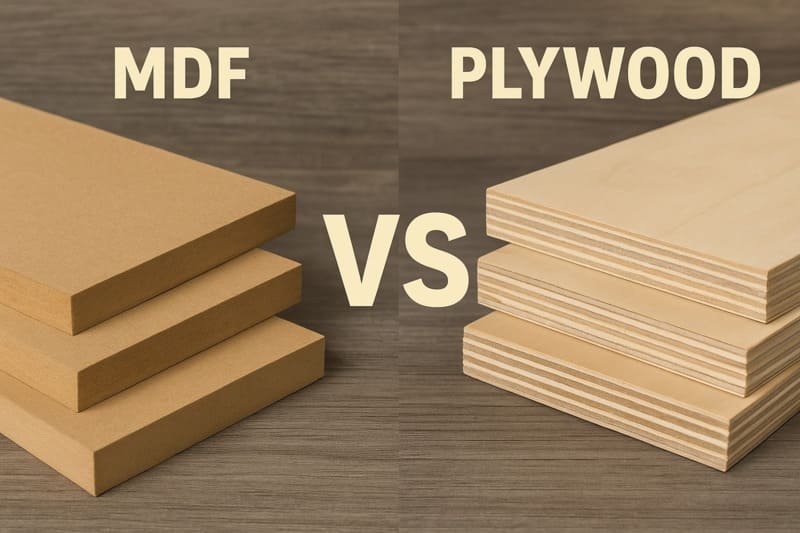
Rather than choosing one material for everything, experienced designers now combine materials based on function:
-
Plywood for kitchen carcasses and heavy load areas
-
HDHMR for kitchen shutters and moisture-exposed furniture
-
MDF for wardrobe shutters, wall panels, and design elements
-
Liner laminates for interiors
https://khidkihomes.com/collections/laminates -
PVC edge bands for sealing and durability
https://khidkihomes.com/collections/khidki-pvc-edge-bands
This layered approach improves performance while keeping costs controlled.
6. Final Recommendation for Interior Designers in 2026
There is no single “best” board for modern interiors. The smartest designs in 2026 are material-specific:
-
Use plywood where structure and moisture resistance are critical
-
Use MDF where finish, detailing, and design matter most
-
Use HDHMR where both performance and aesthetics are required
Designers who understand material behaviour deliver interiors that last longer, age better, and require fewer repairs.
For material guidance, pricing, or bulk requirements:
Call 08045888842
Visit www.khidkihomes.com

